 EN
EN



When sourcing heat transfer vinyl for large-scale production runs, the tension between budget and quality is a constant challenge for decorators, garment manufacturers, and print shops alike. pvc htv has emerged as one of the most strategically positioned materials in the industry precisely because it manages to address both sides of that equation without serious compromise. Understanding how this material achieves that balance is essential for any buyer planning a bulk order with tight margins and high durability expectations.
The reason pvc htv continues to dominate bulk purchasing decisions across apparel decoration and promotional merchandise sectors comes down to a combination of material science, manufacturing efficiency, and real-world application performance. This article examines each dimension of that balance in detail, so procurement managers, production supervisors, and creative directors can make fully informed decisions when placing high-volume orders.
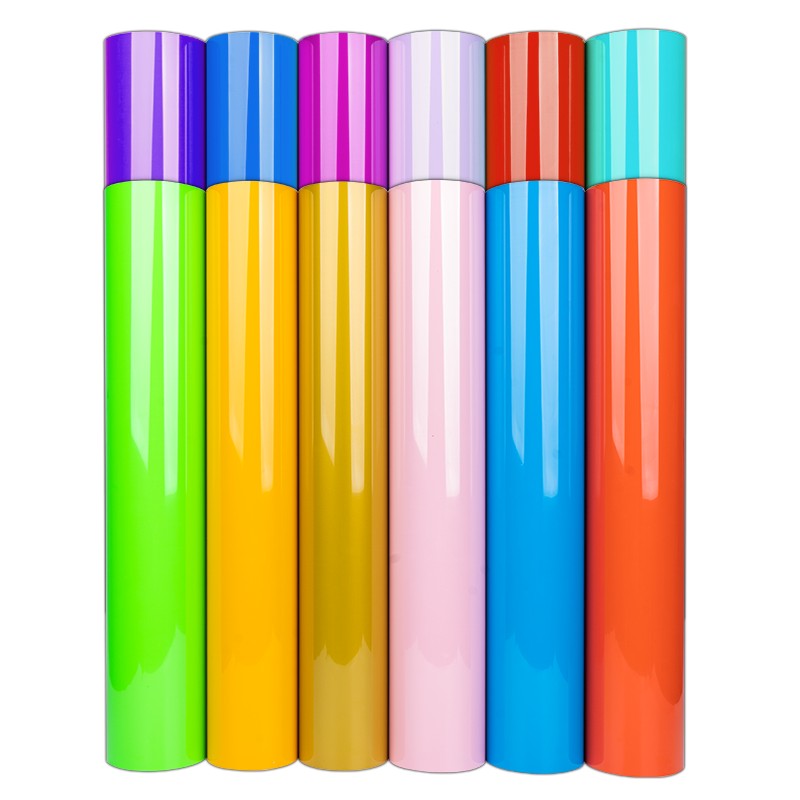
Understanding the Material Properties of PVC HTV
What Makes PVC a Cost-Efficient Base Material
Polyvinyl chloride, the base polymer behind pvc htv, is one of the most widely produced synthetic plastics in the world. Its abundance in global supply chains drives raw material costs down significantly compared to more specialized polymer alternatives. For manufacturers producing heat transfer vinyl at scale, this translates directly into lower unit pricing for buyers, particularly when orders cross into rolls, cases, or pallet-level volumes.
The chemical structure of PVC also allows for precise control over flexibility, thickness, and finish characteristics during production. This means that a single material platform can be engineered to meet a wide range of application requirements without switching to entirely different material categories. For bulk buyers, this versatility reduces the complexity of managing multiple SKUs and simplifies supplier relationships.
Additionally, pvc htv benefits from well-established manufacturing processes that have been optimized over decades. High-volume production lines can run with minimal waste and consistent output quality, and those efficiencies are reflected in competitive pricing structures that make bulk orders economically attractive for both small print shops scaling up and large contract decorators managing hundreds of thousands of pieces per month.
Performance Characteristics That Justify the Investment
Despite its cost advantages, pvc htv does not sacrifice the performance benchmarks that professional decorators require. The material bonds reliably to cotton, polyester, cotton-polyester blends, and various synthetic fabrics under standard heat press conditions. This broad substrate compatibility reduces the risk of costly application errors when a single production run spans multiple garment types.
The color vibrancy and surface finish quality of pvc htv are consistently strong, delivering sharp opaque coverage that holds up through repeated wash cycles. For bulk orders destined for workwear, event merchandise, or branded apparel, this wash durability is a non-negotiable performance requirement. PVC formulations used in heat transfer vinyl are specifically engineered for adhesion longevity, meaning the investment in material quality pays forward through the product's useful life.
Ease of weeding is another performance factor that directly affects the economics of bulk production. pvc htv is known for its clean weeding behavior, reducing labor time per piece and lowering the rate of material waste from weeding errors. In high-volume environments, even small per-piece time savings compound into significant cost reductions across an entire production run.
How Bulk Order Economics Work with PVC HTV
Volume Pricing and Unit Cost Reduction
The economics of pvc htv at bulk scale follow a clear and favorable curve. As order volumes increase, per-unit costs decrease due to reduced setup costs, amortized tooling and machinery usage, and optimized material yield. Suppliers of pvc htv typically offer tiered pricing structures that reward consistent high-volume buyers with meaningful discounts, making it one of the most scalable material categories in the heat transfer vinyl market.
For buyers committing to full roll quantities or multi-roll case orders, the price per linear meter or per square foot drops substantially compared to sample-size or cut-piece purchases. This gap widens further when buyers standardize on a limited color palette, since full production runs in specific colors allow suppliers to schedule longer manufacturing runs with fewer changeovers, sharing those savings with the customer.
Procurement teams that plan their pvc htv purchasing around seasonal production cycles rather than reactive restocking can negotiate even stronger pricing terms. Advance purchase agreements and blanket orders lock in favorable unit costs while giving suppliers the production visibility they need to deliver consistently on schedule, a critical factor when managing garment decoration timelines for retail or event launches.
Reducing Hidden Costs Through Material Consistency
One of the underappreciated economic benefits of pvc htv in bulk operations is its contribution to reducing hidden production costs. Materials with inconsistent adhesion, variable weeding behavior, or unpredictable color output create downstream quality issues that are expensive to correct. Reprints, rejected batches, and customer returns all erode the apparent savings from choosing the cheapest available option.
High-quality pvc htv from reputable sources delivers batch-to-batch consistency that professional operations depend on. When machine settings, press times, and temperature profiles are calibrated to a specific pvc htv formulation, operators can run production confidently without constant adjustment. This consistency is especially valuable in contract decoration environments where throughput speed is directly tied to revenue.
The storage characteristics of pvc htv also support bulk purchasing strategies. Properly stored rolls maintain their application properties over extended periods, allowing buyers to purchase in volume without worrying about material degradation before use. This shelf stability makes it practical to take advantage of bulk pricing opportunities without operational risk.
Application Efficiency in High-Volume Production Environments
Cutting and Weeding Efficiency at Scale
In any bulk decoration operation, the time spent cutting and weeding heat transfer vinyl is one of the most significant variable labor costs. pvc htv is specifically valued in professional settings for its precise cutter performance. The material responds predictably to vinyl cutters and digital cutting machines, producing clean cut lines with minimal drag or tearing even on complex designs with fine detail work.
The weeding behavior of pvc htv is tightly connected to its layer structure and the formulation of its carrier release coating. When the material is engineered correctly, excess vinyl lifts cleanly away from the design without pulling at adjacent sections or leaving adhesive residue on the carrier sheet. In a bulk production environment where operators are weeding thousands of pieces per day, this clean separation directly reduces per-piece labor time and operator fatigue.
Shops that have switched to consistent pvc htv sourcing from a reliable supplier commonly report measurable improvements in throughput rates simply from reduced weeding time and lower rejection rates from weeding errors. These operational gains compound across a full production cycle and reinforce the material's value beyond its listed unit price.
Heat Press Parameters and Throughput Optimization
The application window for pvc htv, meaning the combination of temperature, pressure, and dwell time that produces an optimal transfer, is well-documented and reliably consistent across standard commercial heat presses. This predictability is a major operational advantage in bulk settings where presses are running continuously across shifts.
When press operators work with a material that behaves consistently, they can calibrate once and maintain output quality throughout a run rather than continuously testing and adjusting. pvc htv typically applies successfully within a clearly defined heat and pressure range that is compatible with both entry-level and industrial heat press equipment, making it accessible across different scales of production operation.
The peel behavior of pvc htv, whether hot peel or cold peel depending on the specific product formulation, also plays into throughput speed. Understanding and standardizing on the correct peel method for a given pvc htv product allows production lines to move efficiently from press to finish without unnecessary waiting time or the risk of failed transfers from incorrect peeling technique.
Quality Assurance Considerations for Bulk PVC HTV Orders
Evaluating Supplier Consistency Before Committing to Volume
Before committing to a large-volume pvc htv purchase, professional buyers should request samples that span multiple production batches if possible. This reveals whether the supplier maintains tight tolerances on color, thickness, and adhesive performance across different production runs, which is the true test of a supplier's capability to support sustained bulk buying relationships.
Key quality indicators to evaluate include color accuracy against reference standards, adhesive bond strength after wash testing, weeding ease across both simple and intricate cut designs, and finish surface quality under different lighting conditions. Any pvc htv supplier operating at a professional level should be able to provide technical data sheets and wash durability test results to support their performance claims.
It is also worth evaluating the packaging and roll quality of pvc htv materials before ordering in volume. Rolls that are wound unevenly, stored improperly during transit, or packaged without adequate moisture protection can arrive with application defects despite being manufactured correctly. A supplier's logistics and packaging standards are therefore part of the overall quality equation for bulk buyers.
Long-Term Cost of Quality vs. Initial Price Savings
The total cost of working with pvc htv at bulk scale is not determined by purchase price alone. Buyers who optimize purely on unit cost without adequate quality benchmarking often encounter downstream expenses that more than offset the initial savings. Return rates, reprint costs, customer dissatisfaction, and lost contract renewals all carry financial weight that must be factored into the true cost calculation.
Sourcing pvc htv from suppliers with verified quality standards and consistent production processes protects against those risks. The slightly higher unit price of a premium formulation is frequently justified by lower defect rates, higher customer satisfaction scores, and more predictable production planning. For businesses operating on contract decoration models with repeat clients, quality reliability is a competitive differentiator that directly supports revenue retention.
Building a pvc htv sourcing strategy around a trusted supplier also creates value beyond individual transactions. Established supplier relationships often come with better lead time commitments, priority access during peak demand periods, technical application support, and the ability to co-develop custom color or finish specifications for dedicated product lines. These relationship benefits compound over time and represent meaningful competitive advantages for businesses that cultivate them strategically.
FAQ
Is pvc htv suitable for all fabric types in bulk garment decoration?
pvc htv performs well on most standard apparel fabrics including cotton, polyester, and cotton-polyester blends, which covers the vast majority of garments used in bulk decoration projects. It is less commonly recommended for fabrics with very high nylon content or technical stretch fabrics where flexibility demands exceed PVC's natural elongation properties. Testing on specific substrates before a full production run is always advisable when working outside standard fabric categories.
How does pvc htv compare to other vinyl types in terms of bulk pricing?
pvc htv is generally positioned as one of the more cost-accessible heat transfer vinyl categories, particularly when ordered in volume. Its raw material costs and established manufacturing processes contribute to competitive pricing that makes it attractive for high-volume buyers. Other specialty vinyl types such as glitter, holographic, or stretch formulations typically carry higher per-unit prices due to more complex manufacturing processes and material inputs.
What storage conditions preserve pvc htv quality for bulk inventory?
pvc htv should be stored in a cool, dry environment away from direct sunlight and heat sources. Rolls should be kept in their original packaging or rewrapped in moisture-resistant material if stored for extended periods. Maintaining stable storage conditions is essential for preserving adhesive performance and ensuring that bulk inventory remains application-ready when production demands spike unexpectedly.
Can pvc htv handle multi-color layered designs in production settings?
pvc htv can accommodate multi-color layered designs effectively when layers are applied in the correct sequence and each transfer is allowed to bond at appropriate heat and pressure settings. The material's consistent thickness and adhesive formulation make it predictable for layered application work. Production shops should verify specific layering compatibility with their chosen pvc htv product, as adhesion between layers can vary depending on the exact formulation and application conditions used.